

What if the trick to eating a whole crab is simply knowing what to tackle first? If the shell, body sections, and unfamiliar parts have you hesitating, you’re not alone. Learning how to eat a whole crab is easier when you follow a clear order. You don’t need special skills to enjoy the meat without wasting it or making a mess.
This guide explains which parts to eat and which to discard, how to open the shell, and where to look for meat in the claws, legs, and body. Follow the steps to sit down to crab with more confidence and less guesswork.
In Houston, The Catch serves Cajun seafood, including crab and seafood boils, with dine-in, takeout, and online ordering. If you’re searching for “seafood near me” or a “Cajun restaurant near me,” choose the location that works for you: Conroe at 2121 W. Davis St, 77304; Atascocita at 6730 Atascocita Rd, 77346; or Meyerland at 10105 S. Post Oak Rd, 77096. The Catch also serves customers in communities including Humble, Missouri City, and Bellaire.
Key Takeaways
- Learn how to eat a whole crab in a practical order: inspect the body, remove the top shell, then separate the meat.
- Set out a sturdy plate or tray, napkins, and a bowl for shells before you start.
- Use a different approach for legs, claws, and body sections to reach the meat and keep it separate from discarded shell.
- Seasoning and dipping sauces are optional. Taste the crab on its own first, then add accompaniments if you like.
- For Cajun seafood in the Houston area, visit The Catch in Conroe at 2121 W. Davis St, 77304; Atascocita at 6730 Atascocita Rd, 77346; or Meyerland at 10105 S. Post Oak Rd, 77096.
How to Eat a Whole Crab: Identify the Parts Before You Start
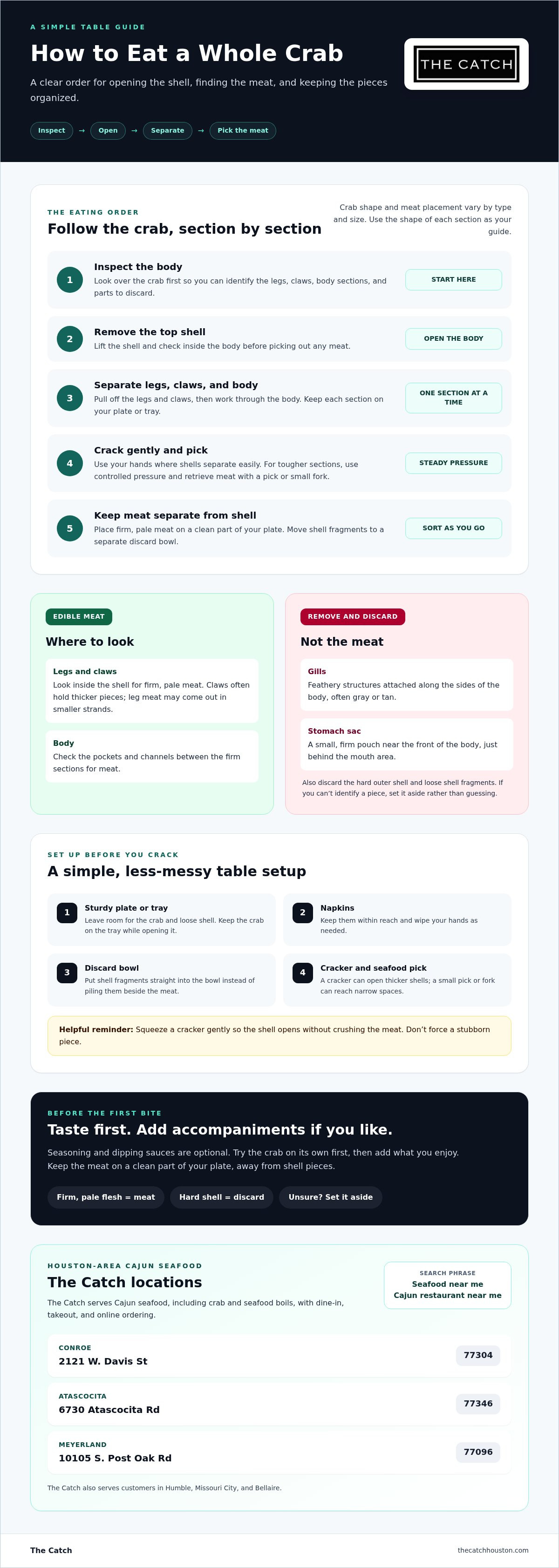
A whole crab can look like a puzzle at first, but recognizing a few sections is enough to get started. To learn how to eat a whole crab, follow a simple order: inspect the body, remove the top shell, then separate the legs, claws, and body to find the meat. The shape and amount of meat vary by crab type, so use these steps as a guide rather than expecting every crab to open in exactly the same way.
Crab meat is the tender, edible flesh found inside a crab’s legs, claws, and body. Legs and claws hold meat inside their shells, while body meat may be tucked into small compartments. For an overview of crab species and the ways crab is served around the world, see Crab as food.
Which parts of a crab contain meat?
Look for firm, pale meat inside the legs and claws. Claws often hold thicker pieces, while leg meat may come out in smaller strands along the shell. In the body, check the pockets and channels between the firm sections. The amount and location depend on the crab’s type and size, so follow the shape of each section and take your time.
Place the meat you’ve removed on a clean part of your plate, away from shell pieces. Firm flesh is the part you’re looking for. Hard shell and soft, feathery, or sac-like internal parts aren’t meat. If you can’t identify a piece, set it aside rather than guessing.
Which crab parts should you remove?
After lifting off the top shell, look inside the body before picking out meat. The gills are feathery structures attached along the sides of the body, often gray or tan. Remove and discard them. The stomach sac is a small, firm pouch near the front of the body, just behind the mouth area. Remove that too. Neither is the meat diners are trying to extract.
Discard the hard outer shell and loose shell fragments as you work, keeping them separate from the meat. Internal parts can look different from one crab to another, and preparation varies by species. If you’re eating crab at a restaurant and aren’t sure what you’re looking at, ask the staff to point out the edible sections. Once you’ve identified the parts, you’re ready to prepare the crab for cracking and picking.
How to Prepare a Whole Crab Before Cracking the Shell
A little setup makes cracking easier and keeps shell pieces from taking over the table. You don’t need a special kit to learn how to eat a whole crab, but having a few basics within reach lets you focus on opening each section and gathering the meat.
In short: set out your plate, napkins, and discard bowl, then separate the crab into sections before cracking and picking out the meat.
- Set up your space. Choose a sturdy plate or tray with enough room for the crab and loose shell. Place napkins and a separate bowl for discarded shells within reach.
- Choose your tools. A crab cracker can help open a hard claw or leg shell with controlled pressure. A small seafood pick or fork can reach narrow spaces where your fingers can’t easily grasp the meat.
- Separate the sections. Pull off the legs and claws, then work on the body. Keep each part on the plate or tray so it’s easier to handle and the meat stays apart from the shell.
- Crack and pick. Use your hands where the shell separates easily. For tougher sections, gently squeeze with a cracker, then use the pick or fork to retrieve meat from tight spots.
- Clear and clean up. Put shell fragments in the discard bowl as you work. Wash your hands after handling the shells and before reaching for other foods.
What tools help you eat a whole crab?
A crab cracker is useful for thicker shells, especially around the claws. Squeeze gently so the shell opens without crushing the meat inside. A seafood pick or small fork helps tease meat from narrow sections. If you don’t have tools, use your fingers on joints and shells that pull apart easily. Don’t force a stubborn piece.
How to make the meal less messy
Keep the crab on the tray while opening it instead of holding it over the table. Wipe your hands as needed, and move discarded shell straight to the bowl rather than letting it pile up beside the meat. Keeping the two separate makes it easier to see what’s ready to eat and what still needs attention.
If you’d rather enjoy Cajun seafood without preparing crab at home, The Catch serves seafood boils. You can view Cajun seafood options for its Conroe location.
How to Crack Crab Legs, Claws, and Body for the Meat
Cracking a whole crab feels more manageable when you handle one section at a time. Separate the legs and claws, work through them, then turn to the body. Use steady pressure and stop when the shell opens. A gentle crack helps keep the meat in larger pieces that are easier to remove.
| Crab section | How to open it | Where to look for meat |
|---|---|---|
| Legs | Separate at the joints, then gently crack or split the shell. | Along the inside of each leg section. |
| Claws | Use a cracker to apply light pressure to the hard shell. | Inside the main claw and its smaller sections. |
| Body | Remove the top shell, discard the gills and stomach sac, then break the body into smaller pieces. | In the pockets and cavities between body sections. |
How do you get meat from crab legs and claws?
Start with a leg and gently twist its sections apart at the joints. Check each open end. If the meat doesn’t slide out, split the shell lengthwise or use a cracker with light pressure. Pull the shell away from the meat rather than crushing both together. A small pick can help retrieve meat from a narrow tip or joint. Avoid pushing jagged shell fragments through the flesh.
Claws have a thicker shell, so place one in a crab cracker and squeeze just enough to create a break. Remove the shell in pieces, then lift out the exposed meat. If a joint separates easily by hand, there’s no need to use a tool.
How do you open the crab body?
Lift away the top shell and locate the feathery gills along the sides and the small stomach sac near the front. Remove and discard these parts, as described earlier. Then break the body into sections you can comfortably hold. Check each cavity for firm meat and use a pick to reach tight spaces rather than forcing shell into them.
Body shape and meat placement differ among crab types, so don’t expect every section to open in the same way or yield the same amount. If you’re learning how to eat a whole crab, take your time: open, inspect, and pick each part before moving on. Keeping the meat and shell separate makes it easier to see what you’ve already uncovered.
How to Enjoy Crab Meat and Avoid Common First-Timer Mistakes
Once the meat is out, keep it on a clean part of your plate and move shell pieces to a separate bowl. This makes it easier to spot stray fragments and enjoy each bite without sorting through the remains. Crab can look and taste different depending on its type and preparation, so not every serving will be identical.
Crab is satisfying on its own, but you can add melted butter, a dipping sauce, or extra seasoning if you like. These are optional. Taste the meat first, then decide whether you want another layer of flavor.
What mistakes should beginners avoid?
Take a measured approach rather than trying to force open every section. Biting directly into a hard shell can be uncomfortable, and crushing a claw or leg too forcefully may break the meat into smaller pieces or leave shell fragments mixed in. If a section resists, set it aside and move to an easier one before coming back to it.
Keep the gills and stomach sac separate from the meat, and don’t mistake unfamiliar internal parts for something to eat. Use this troubleshooting list as you work:
- You find a shell fragment: Pause and remove it before taking another bite. Keep picked meat away from the discard pile.
- A section won’t open: Ease off rather than squeezing harder. Try a different joint or use a small pick where the shell has already separated.
- Meat breaks or slips away: Slow down, open the shell in smaller pieces, and check the cavity again before discarding it.
What should you do with unfamiliar crab parts?
Don’t guess if you can’t identify a part. Crab anatomy and customary ways of eating crab vary, so ask the person who prepared it or the restaurant staff to point out what’s edible and what should be set aside. A quick question is better than eating something simply because it’s attached to the crab.
With a little patience, how to eat a whole crab becomes less of a puzzle and more of a relaxed meal. If you’d rather enjoy Cajun seafood without cracking crab at home, The Catch serves crab and seafood boils. Explore Cajun seafood options at The Catch’s Atascocita location.
Where to Enjoy Cajun Crab in the Houston Area
After learning how to eat a whole crab, you may want to enjoy Cajun seafood without handling the cooking and setup at home. The Catch serves Cajun seafood, including seafood boils, fried catfish and shrimp, oysters, po’ boys, gumbo, crawfish étouffée, boudin balls, and shrimp étouffée. The menu also includes seafood combos. Check current offerings before ordering, since availability can vary and a specific whole-crab preparation isn’t confirmed.
Looking for Cajun seafood, fried fish and shrimp, or restaurants near 77096, 77346, and 77304? Use the addresses below to find the Houston-area location that fits your trip.
Which Houston-area location is closest?
- Conroe: 2121 W. Davis St, Conroe, TX 77304. See Conroe online ordering options.
- Atascocita: 6730 Atascocita Rd, Atascocita, TX 77346. Browse Atascocita online ordering options.
- Meyerland: 10105 S. Post Oak Rd, Houston, TX 77096. Check Meyerland online ordering options.
For readers in Conroe, Atascocita, Humble, Missouri City, Bellaire, the Meyerland area, and Houston, compare the listed ZIP codes and choose the address that fits your trip. Check the selected location’s current menu for the dishes you have in mind.
When does ordering a seafood boil make sense?
A seafood boil can be a convenient choice when you’d rather skip cooking and focus on enjoying a Cajun seafood meal. The Catch serves seafood boils and seafood combos, but check the current online options for the available crab selection and preparation.
Review the online ordering options for the location nearest you, and confirm current offerings before placing an order or visiting.
Enjoy Your Next Crab Meal with Confidence
Learning how to eat a whole crab comes down to a few steady steps: identify the sections, separate shell from meat, and work through the legs, claws, and body at your own pace. Keep picked meat apart from shell, and ask for help if you come across a part you can’t identify. The crab’s type and preparation can affect its appearance and flavor, so there’s no need to expect every meal to look exactly the same.
If you’d rather leave the cooking to someone else, The Catch serves Cajun seafood and seafood boils. Guests can choose dine-in, takeout, or online ordering at three Houston-area locations: Conroe at 2121 W. Davis St, 77304; Atascocita at 6730 Atascocita Rd, 77346; and Meyerland at 10105 S. Post Oak Rd, 77096. Check current online options for the location nearest you, since a specific whole-crab dish isn’t confirmed.
Explore current online ordering options, then enjoy your next crab meal with a little more confidence and a lot less guesswork.
Frequently Asked Questions
How do you eat a whole crab for the first time?
For a first crab meal, set out a plate, napkins, and a bowl for discarded shells. Separate the legs and claws, then lift off the top shell and remove the gills and stomach sac. Crack each section gently and look inside for firm meat. The best way to learn how to eat a whole crab is to work slowly, since its structure and the amount of meat can vary by type.
Which parts of a whole crab can you eat?
The edible meat is commonly found inside the legs and claws and in pockets within the body. The amount and layout vary by crab type, so some sections may be easier to pick than others. The hard shell, gills, and stomach sac aren’t the meat diners are looking for. If you can’t identify a part, ask the person who prepared the crab rather than guessing.
Do you need special tools to crack a whole crab?
No, you can use your hands where the shell separates easily. A crab cracker can help open thicker claw shells, while a small seafood pick or fork can reach meat tucked into narrow sections. Keep a sturdy plate, napkins, and a bowl for shells close by. Apply gentle pressure with the cracker so the shell opens without crushing the meat or leaving small fragments mixed in.
How do you get meat out of crab legs?
Separate each leg section at its joint and check the open ends for meat. If the shell doesn’t split easily, use a crab cracker with light pressure, or pull it apart by hand where it’s already loosened. A seafood pick can help reach meat in narrow sections. Avoid forcing sharp shell pieces through the flesh, since that can break the meat and make it harder to separate from the shell.
Is the yellow or green material inside a crab edible?
The material inside can vary with crab type and preparation, so don’t assume an unfamiliar part is meant to be eaten. This guide focuses on the meat found in the legs, claws, and body, and identifies the gills and stomach sac as parts to remove. If you’re dining out and aren’t sure what you’re seeing, ask the person who prepared the crab or restaurant staff to identify it.
What is the easiest way to eat crab without making a mess?
Prepare your spot before you start: use a sturdy plate or tray, keep napkins within reach, and set out a bowl for discarded shell. Work on one section at a time, moving extracted meat away from shell pieces as you go. This makes it easier to see what’s ready to eat and what still needs picking. Wash your hands after handling shells and before returning to other foods.
Can you eat a whole crab at a seafood boil?
Crab can be served as part of a seafood boil, but selection and availability depend on the restaurant’s current menu. The Catch serves Cajun seafood, crab, and seafood boils at its Houston-area locations in Conroe, Atascocita, and Meyerland. Check the current menu or online ordering options to confirm whether a whole-crab option is available. If served, remove the parts you’re not eating, then crack the shell and pick out the meat.


